Orange County Criminal Defense Attorney

Criminal Defense Lawyer In Orange County, CA
A criminal conviction for any offense can be a life-changing event. If you are charged with a crime, an Orange County attorney may be the best asset you can have as you work toward defeating the charges against you and avoiding conviction. In addition, the average person with minimal experience in the criminal court system needs legal counsel to navigate their case as successfully as possible.
Brown & Stedman LLP has extensive professional experience in criminal defense representation. Our team of Orange County criminal defense lawyers has helped many Orange County clients avoid conviction and minimize sentencing in various criminal cases. Prior results do not guarantee a similar outcome.
Firm attorney Edwin B. Brown has personally argued two civil cases before the California Supreme Court, serving as counsel of record in Kentucky Fried Chicken of Cal., Inc. v. Superior Court (1997) 14 Cal.4th 814 and as defense counsel in Van Horn v. Watson (2008) 45 Cal.4th 322.
We understand that no two criminal cases are exactly alike and that every defendant has unique needs and concerns that must be addressed in their criminal proceedings. Therefore, when you choose our firm to represent you in a criminal case, you can expect personalized legal counsel and ongoing support.

Why Do I Need an Orange County Criminal Defense Attorney?
The Sixth Amendment of the US Constitution guarantees the right to legal counsel when you are accused of a crime, and it is vital that you fully exercise that right in any criminal case. However, if you cannot afford to hire an attorney or do not wish to pay for a private defense lawyer, the court can appoint a public defender free of charge to act as your defense counsel.
This may seem like the easiest option for securing legal representation, and it can be an attractive possibility because defense counsel can come free of charge. First, however, it is vital to understand the differences between what you can expect from a public defender and what an experienced private Orange County criminal defense attorney can provide.
While most public defenders in California are hardworking and talented attorneys, even the best public defenders do not have much flexibility to provide any client with much in the way of individual attention.
For example, your public defender may only be able to spend an hour or two each day working on your defense while managing several other cases simultaneously. By comparison, you can expect a more personalized defense representation level when you have an experienced private defense lawyer handling your case.
When you face criminal charges, your future is at stake. In the short term a conviction jeopardizes your freedom, but it also puts at serious risk opportunities in your career, your education and in your personal life.
Personally Tailored Criminal Defense Representation In Orange County
You must exercise your constitutional rights after an arrest. First, you have the right to remain silent, and you should fully exercise this right as soon as the police notify you that you are under arrest. Do not attempt to explain yourself or say anything to the police; anything you say can almost certainly be used against you in your criminal trial.
Stay silent and comply with the police officer’s directions through the arrest and booking process. You will eventually be permitted to make your phone calls, and you should reach out to Brown & Stedman LLP as soon as possible after your arrest. When we represent clients in criminal cases that include, among others:
- White collar defense: The complicated nature of these cases demands the kind of personalized and experienced attention we can deliver.
- DUI: We work on your behalf to challenge facts and evidence as only we know how.
- Homicide: We can help you see options you may not know about and bring tactics that have allowed us to prevail in other homicide trials.
- Drug offenses: Drug offenses remain serious matters. Do not attempt to represent yourself. Let our years of making arrests and investigating drug crimes, as well as winning for our clients, be of benefit to you.
- Domestic violence: Even just being charged with domestic violence can change your life. We understand how to handle this situation in and out of the courtroom. Let us bring this knowledge to you
Our firm takes time to learn as much as possible about a client’s situation to ensure we address all the unique variables of their case. Every criminal case will involve different details, and the penalty a defendant faces can fluctuate significantly based on multiple variables.
Once you have been arrested on criminal charges, the police will book you and permit you to make a few phone calls. Make sure one of those calls is to an Orange County criminal defense attorney you can trust.
What Does an Orange County Criminal Defense Lawyer Do?
The right defense counsel can make a tremendous difference in the outcome of your criminal case. The criminal justice system of the United States requires the prosecution in a criminal case to establish the defendant’s guilt beyond a reasonable doubt. This means the prosecution has the burden of proving guilt; the defendant does not necessarily need to prove their innocence.
However, it is not wise to passively hope that the prosecution fails to meet this burden. It is always best to be as proactive as possible in a criminal case, and this is where your Orange County criminal defense attorney will be most helpful.
Your attorney’s primary goal in handling your case should be to secure an acquittal or case dismissal. They may accomplish this in various ways, such as highlighting due process violations by the police who arrested you or citing chain of custody violations in the prosecution’s handling of the material evidence in your case. They may also seek to disprove the prosecution’s allegations against you by establishing an alibi, proving you could not have committed the offense in question.
When a conviction is unavoidable, and the prosecution has more than enough evidence to convict, they may offer a plea deal to the defendant. In the plea-bargaining process, the prosecution exchanges a lighter sentence or reduced charges in exchange for the defendant’s swift guilty plea.
This will conserve court resources and save time and money for all parties involved when a defendant’s guilt is certain. If you know you committed the offense in question and your defense attorney acknowledges that you have minimal room to fight the charges against you, they will likely advise you to accept a plea deal.
How to Defend Against Criminal Charges
The defenses available to you in a criminal case largely depend on the nature of the offense, your prior criminal history, and other variables. For example, if you are charged with drug possession because the police found drugs in your car during a traffic stop, you could have multiple defense options.
Your Orange County criminal defense attorney may seek to prove that the police lacked probable cause to search your vehicle or that the drugs in question did not belong to you. You may have given a friend a ride, and they dropped the drugs in your vehicle mistakenly, or some other situation may have occurred in which drugs that did not belong to you found their way into your vehicle.
If you are charged with a crime such as domestic violence, assault, or homicide, you may need to prove that you acted in self-defense.
California doesn’t have a law called “Stand Your Ground.” But California law already says you don’t have to retreat before defending yourself anywhere you’re legally allowed to be — this comes from case law and general self-defense rules, not just the Castle Doctrine. Inside your own home, Penal Code section 198.5 goes further: if someone who isn’t a family or household member forcibly breaks in, the law presumes you reasonably feared death or serious injury, which can support a self-defense claim.
In general, to claim self-defense you must show that you reasonably believed you faced imminent danger of death or serious injury
When you cannot prove your innocence affirmatively or establish a solid alibi, avoiding conviction may come down to attacking the prosecution’s case at a foundational level. This can include showing failures in the court process, due process violations, civil rights violations, or problems with the credibility of the prosecution’s evidence and witnesses. Ultimately, the best possible defenses vary significantly from case to case, and it is essential to have defense counsel who can help you thoroughly explore all available avenues of defense.
Infractions, Misdemeanors, and Felonies
The California Penal Code separates criminal offenses into different designations. Infractions are the least severe and apply to minor violations of the law, such as speeding or parking violations. Infractions in California are punishable by a small fine of up to $250 in most cases. Misdemeanors are more serious offenses and can entail harsh penalties, including more significant fines, incarceration in county jail, mandatory probation, and various other penalties.
Felonies are the most severe criminal charges a person can face in California. Most felonies involve victimization of another party, premeditated illegal actions, and an intentional desire to harm others. The penalties for felonies can include incarceration in state prison, heavy fines, loss of constitutional rights, and various personal and professional consequences.
Some offenses in California are “wobblers,” meaning they can qualify as misdemeanors or felonies depending on the unique details of a case. Every criminal case will involve aggravating and mitigating factors. Aggravating factors enhance the potential penalties a defendant faces and effectively work against the defendant. Mitigating factors work in the defendant’s favor and may lead to lighter sentencing.
Alternatives to Jail: Orange County’s Collaborative Courts
Not every criminal case has to end in a conviction or a jail sentence. Orange County Superior Court runs several collaborative courts that combine judicial supervision with treatment instead of standard punishment:
- Adult Drug Court and DUI Court: four-phase programs for non-violent, substance-related offenses that pair treatment with regular court check-ins.
- Mental health programs, including Recovery Court and Opportunity Court: designed for defendants whose charges are connected to a diagnosed mental illness.
- Veterans Treatment Court: a partnership with the U.S. Department of Veterans Affairs for veterans dealing with combat trauma, PTSD, or substance abuse.
Eligibility depends on the charge, your criminal history, and whether the underlying issue can be documented. An Orange County criminal defense attorney can review your case and tell you whether one of these programs is realistically available to you.
What Is Plea Bargaining?
If you know you broke the law and the prosecutor handling your criminal case has all the evidence to convict you, plea bargaining could be the best option for resolving your case. In a plea bargain, the prosecution agrees to lighter sentencing or reduced charges in exchange for the defendant submitting a guilty plea at their arraignment.
Plea bargaining isn’t offered to every defendant, and a defendant’s criminal history can discourage a prosecutor from considering a plea agreement. However, if a plea bargain is offered, your Orange County criminal defense lawyer will be a crucial asset in determining if the prosecution’s deal suits your best interests.
What Happens After You’re Arrested in Orange County, CA?
Knowing what comes next can make an already stressful situation easier to handle.
- Booking and the 48-hour rule: Under Penal Code section 825, the county generally must take you before a judge within 48 hours of arrest, excluding Sundays and holidays, or release you.
- Bail: Orange County Superior Court sets bail using its published felony and misdemeanor bail schedule. A judge can raise or lower that amount based on the facts of your case and your criminal history.
- Arraignment: this is your first court appearance. The judge reads the charges, you enter a plea, and the court addresses bail. For many misdemeanor cases, an attorney can enter a not guilty plea on your behalf without you appearing in person, under Orange County Local Rule 856.
- Preliminary hearing (felony cases only): a judge decides whether the prosecution has enough evidence to move your case to trial. If so, the case proceeds on a new charging document called an Information.
- Pretrial conference and motions: your attorney and the prosecutor discuss the case, which can include plea negotiations or motions such as a request to suppress evidence.
- Trial: if the case is not resolved earlier, it proceeds to trial, where the prosecution must prove your guilt beyond a reasonable doubt.
Facing criminal charges in Orange County? Call Brown & Stedman LLP at 949-459-5900 for a free consultation, or contact us online.
Get Help from Our Orange County Criminal Defense Attorney
Time is a critical factor in any criminal case. The sooner you secure legal counsel, the better your chances are of successfully fighting the charges against you. Of course, no attorney can guarantee a client any specific result in any given case, but the right Orange County criminal defense attorney handling your case can make a very positive impact on the outcome. Brown & Stedman LLP has the experience and skill you need on your side to develop an effective defense. Contact us to schedule a free initial consultation.
Frequently Asked Questions About Criminal Defense in Orange County
Q: How long can police hold me before I’m charged with a crime?
A: In most cases, no more than 48 hours, excluding Sundays and holidays, under Penal Code section 825. If prosecutors don’t file charges in that window, you must be released.
Q: Will I automatically go to jail for a first-time misdemeanor?
A: Not necessarily. Judges have discretion, and many first-time misdemeanor defendants receive probation, diversion, or a reduced charge instead of jail time.
Q: What’s the difference between a misdemeanor and a felony in California?
A: A misdemeanor generally carries up to one year in county jail. A felony can lead to more than a year in state prison. Some offenses, called wobblers, can be charged either way depending on the facts.
Q: Can I get a free lawyer if I can’t afford one?
A: Yes. If you are in custody and cannot afford private counsel, the court can appoint a public defender at no cost, though a public defender’s caseload can limit how much one-on-one time they have for your case.
Q: Do I have to answer police questions after an arrest?
A: No. You have the right to remain silent, and anything you say can be used against you in court. It is best to wait until you have spoken with an attorney.
Q: What happens at my arraignment?
A: The judge reads the charges against you, you enter a plea, and the court addresses bail. Many Orange County misdemeanor cases can be arraigned informally by an attorney under Local Rule 856.
Q: Can criminal charges be dropped before trial?
A: Yes. Charges can be reduced or dismissed if the defense shows insufficient evidence or a due process violation, or if the prosecution agrees to a negotiated plea deal.
Q: Am I eligible for drug court, DUI court, or veterans court in Orange County?
A: It depends on your charge, your criminal history, and whether the issue behind the offense, such as substance abuse, a mental health condition, or military service, can be documented. A criminal defense attorney can review your case for eligibility.
Q: How soon should I contact a criminal defense attorney after an arrest?
A: As soon as possible. Early involvement lets an attorney review evidence, protect your rights, and negotiate with prosecutors before the case moves forward.
Defending Orange County, CA and Nearby Residents Against Criminal Charges
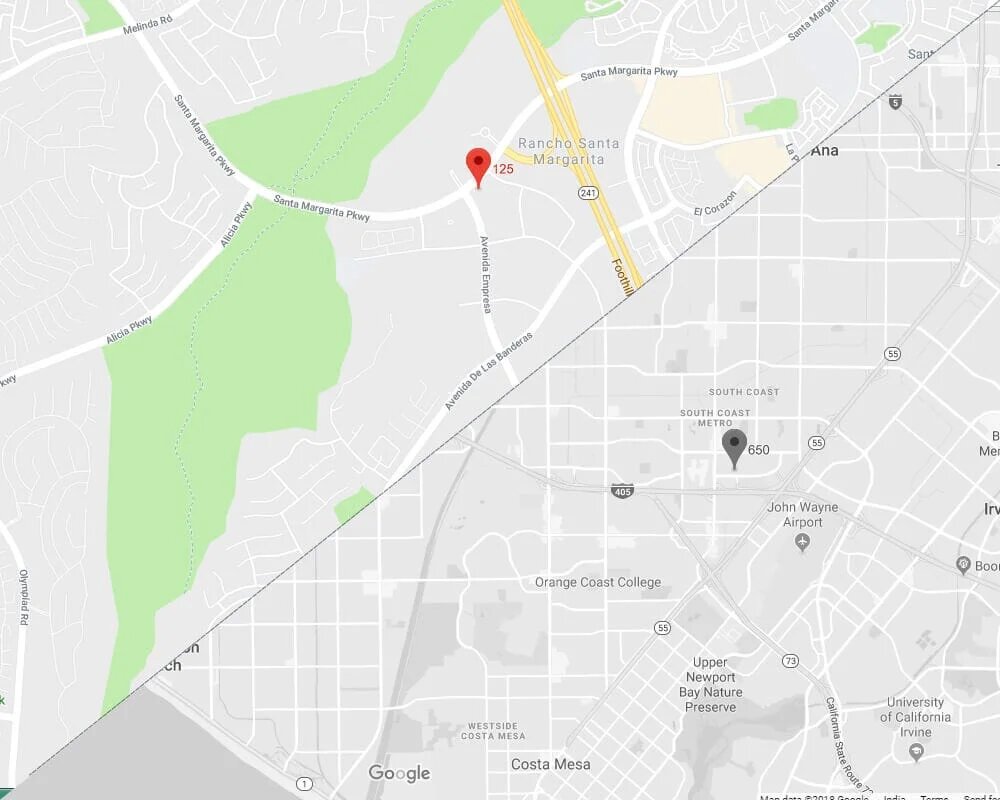
Located in Rancho Santa Margarita, in the heart of South Orange County, our office serves clients throughout nearby communities like Mission Viejo, Lake Forest, Coto de Caza, and Trabuco Canyon. Our central location—just off the 241 Toll Road—provides convenient access to key courts in the Orange County Superior Court – Central Justice Center in Santa Ana, the Harbor Justice Center in Newport Beach, and the West Justice Center in Westminster.
We understand how criminal cases are handled at the local level and regularly appear before area judges and prosecutors. Whether you’re facing misdemeanor or felony charges, our knowledge of local procedures, court policies, and law enforcement practices allows us to build strong, informed defense strategies for residents across Orange County.
Orange County, CA Criminal Defense Resources
Brown & Stedman LLP – Office Location
22342 Avenida Empresa
Suite 125
Rancho Santa Margarita, CA 92688
Local Resources for Criminal Defense in Orange County, CA
-
Orange County Superior Court – Central Justice Center
700 Civic Center Dr W, Santa Ana, CA 92701
Handles felony and misdemeanor cases countywide. -
Harbor Justice Center – Newport Beach
4601 Jamboree Rd, Newport Beach, CA 92660
Frequently processes criminal cases for South Orange County residents. -
Rancho Santa Margarita Police Services (OCSD)
Contact through OC Sheriff’s Department – South Operations Bureau
Local police responsible for arrests and reports in RSM and nearby areas.
Sidebar Badges









Learn More About What We Can Do To Help
We invite you to call us at 949-459-5900 to schedule your free initial consultation. You can also reach our firm by contacting us online.
Tell Us About Your Case
Each time we take a case, we look at the big picture: What can we do to best help solve the problem as efficiently as possible. We use our experience and creativity to propose solutions that allow you to put your legal matters behind you.
© 2026 Brown & Stedman LLP. All rights reserved.
*Images are obtained under license from Canva and other third-party stock image providers, with attribution included where required.
